
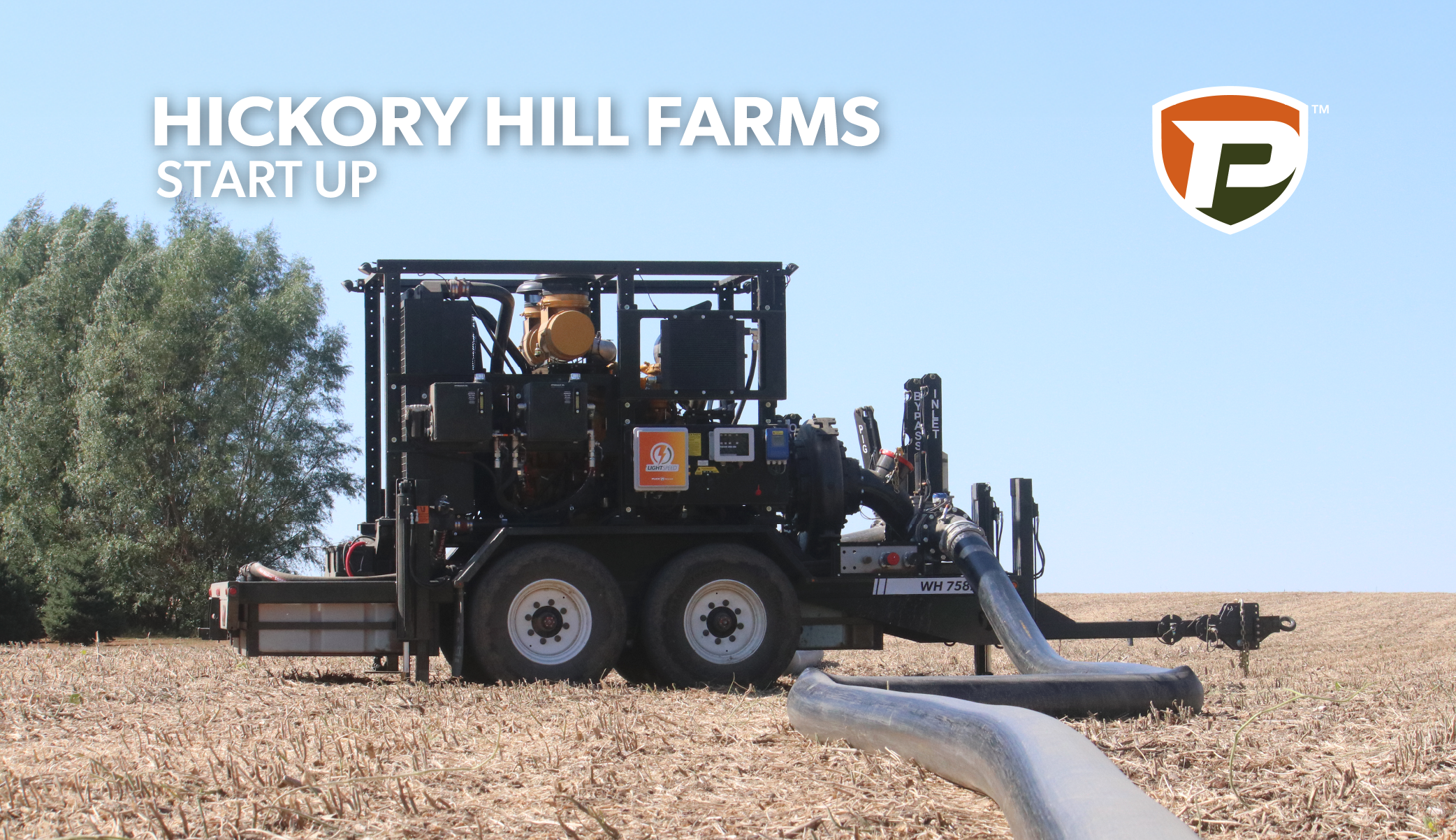
Getting Started at Hickory Hill Farms
Hailing from Northwest Iowa, Hickory Hill Farms Inc. made the decision to bring the dairy’s manure pumping and application in-house. This dairy has about 5,500 heads of cows and approximately 1,800 acres of fields. Hickory Hill built their crew with current employees from around the dairy. Most of these employees were brand new to pumping but willing to put in the work. With their crew decided, Hickory Hill bought a full line of dragline application equipment to get started in the fall season of 2025.
Planning Equipment Purchases
“Getting this project started, we talked to Joe Heese a lot,” said Darren Broersma, manager of Hickory Hill. “He went over a lot of stuff I never would have even thought of until we were doing it ourselves.” Joe Heese, Puck sales team member, met with Darren and the team at Hickory Hill to review the numbers. This planning helped find the pumping system that would fit their needs and wants. Manure type, distance to pump, flow rate, and geography all factor into choosing equipment for the system designed for your operation.
Understanding these numbers and needs required an open mind and a desire to learn. The newly appointed pumping crew for Hickory Hill traveled down to Manning, Iowa for a summer session of Pump School. “Pump School was probably the most important part and the biggest reason we felt comfortable with Puck,” said Darren. “We went there for two days, went through the numbers, talked to other people who have done it. We saw some hose rolling chain drills on the shop floor. It all made me feel comfortable with something we’ve never done before.”
Planning in the Field
Joe continued to meet with Darren and his crew in preparation for their first season. “We spent a lot of time looking at maps to pre-plan different strategies,” said Joe. “Then, when the pumping season got closer, we went to each field and expanded on the original plan with roads, culverts, obstacles, and set layouts in mind.” Joe began visiting periodically to train the crew in things like hose moving and hose rolling techniques, proper agitation at site, and pulling the application tractor.
“Naturally, we were always talking about preventative maintenance, planning ahead, and safety,” said Joe. Of course, you don’t always have to have a Puck employee in the field with you for equipment monitoring and troubleshooting. “LightSpeed is huge with the training and monitoring process,” noted Joe. “Whether I’m a mile away from site or back at the Puck office, I can check in with the guys and see how it’s going.”
First Season Pumping
At the start of the pumping season, Darren and his team felt confident, if a little nervous, in their ability to pump and apply their own manure for the first time. Joe Heese visited to assist with the startup and ensure someone was there to help if questions came up. Eager to get started, they began agitation in the first of their lagoons and started pumping in mid September.
By day three, Joe began taking off the training wheels for the crew and letting them take the lead. “The guys picked up on this quickly and their questions and attention to details was admirable by the end of fall.” In late October, they were finishing a few more fields of their neighbors that had been tacked on to their original plans late in the season. It was easy to see the ease with equipment and tasks that the rookie crew developed over their first pumping season.
As a first-time crew, the Hickory Hill team was moving an average of two million gallons of manure a day. With more than 52 million pumped in six weeks, they were doing well. “We learned a lot, from simple things like not to drag empty hoses, how to roll them up, doing the bow ties,” said Darren. “Just the right way to turn around and do a nice job so we leave the fields good for our customers and our farmers.”
Assistance Eases Stress
There’s great knowledge in the courses at Pump School. However, it never hurts to have a little extra help when doing something for the first time. “By the end of Joe’s time here, we were fairly comfortable with the job,” remembered Darren. “Then over the course of the next five weeks we honed in on some efficiencies and figured some stuff out better.” Joe Heese may have helped Hickory Hill figure out which equipment was best for their operation, but his manual labor wasn’t technically part of the sales deal.
Darren noted that “the fact that they were willing to send someone up here who's got 20 plus years of experience was a huge reason we went with Puck. I think it was worth what we paid for that.” Hickory Hill, with data-backed knowledge and support from Puck, was able to have a very successful first season of pumping.
Hickory Hill can only continue to improve from this starting point. Joe said “I am very excited to see a huge jump in their crew efficiencies as time goes on.” Contact our sales team to learn more about meeting your efficiency goals with your manure application operation. Be sure to watch the full video of following Hickory Hill from pre-planning to season wrap-up on our YouTube channel.
