

Foam Pigging Kickballs vs Bullets
Pigging the line, shooting the pig, blowing out the line, shut it down and send it…
The manure application industry has many phrases and terms to reference cleaning a hose line. This purge of excess manure makes it easier to pick up hose, as well as extend its service life. Utilizing a large CFM air compressor and pushing either a foam ball or cylinder has become the standard method of clearing a hose line in liquid transfer operations. Between the foam ball and the foam cylinder, which shape best fits your operation?
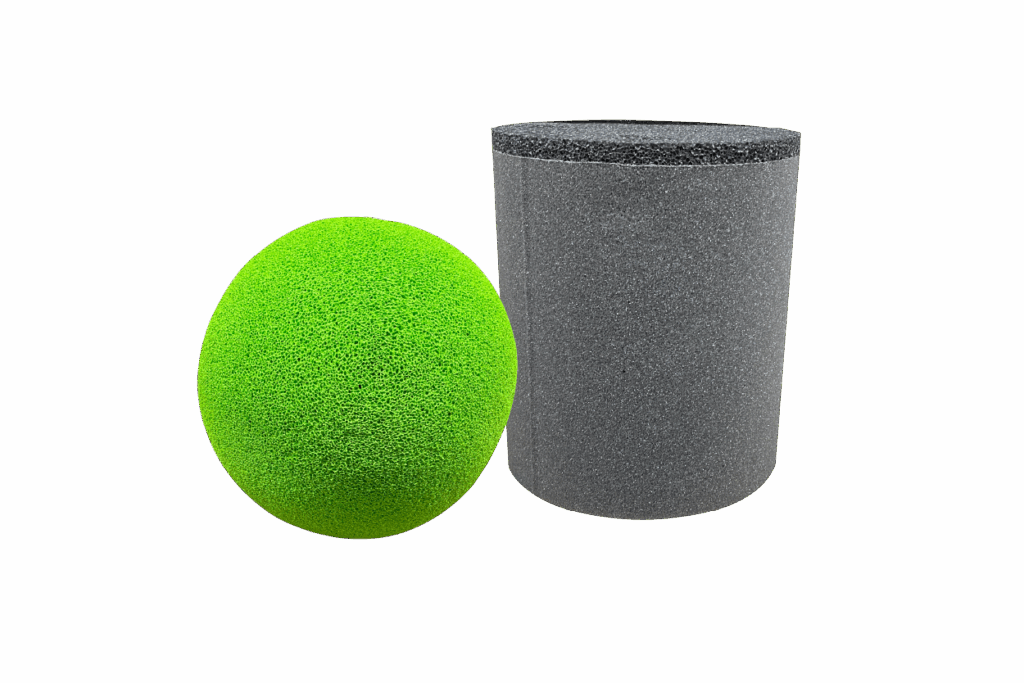
Similarities
The size for both the spherical foam kickball and cylindrical foam bullet is determined by the size of the hose it is intended to clean. The pig must fill the hose interior completely to create a seal in the cavity for air pressure to push it through the line. This dense foam packed into the hose causes a squeegee effect on the hose interior, pushing excess liquid forward. Deciding to use one shape over the other is a business decision specific to custom applicators and their preferences.
Differences
Spherical kickballs are the most common form of foam pigging unit for manure application operations. Kickballs are denser than bullets, and can be reused many times over until their shape is lost. Compressed air can be dangerous, and the high pressures in the line can damage the foam over time. Puck’s Parts Department is well-stocked with bright green foam kickballs in 6”, 8” and 10” sizes.
A pigging bullet is cylindrical in shape, with blunted ends and an elongated foam body. These are an item with one-time use, requiring replacement after running through the line once. Applicators will typically use foam pigging bullets for lighter cleanings, relying on kickballs to do a more thorough swabbing before storing the hose for long periods. The warehouse at Puck stocks gray 8” and 10” size foam bullets for your liquid transfer operation.
Safety
When cleaning the line with an air compressor, ensure everyone is aware of the dangers of compressed air. All people should maintain a distance of at least 50 feet from the hose and any units when the line is under pressure. Couplers should never be broken until all the air in the system is diffused. Pumps should not have any spin as air flows through the bypasses freely. Clutches should be engaged if available. Gravity can be used to your advantage when possible, as air compressors may not be able to push liquid over big hills. Operators can flow back into the pit through the pump when necessary. Alternatively, you can use a portable pig launcher to start from the top of a hill.
No matter what pig shape you decide to use, purging the hose is the best practice for proper hose care. Puck stocks all the essential accessories and parts you need to maintain your hoses’ performance and keep your operation on track. Call our parts department at (712) 655-9200 to place an order.
