

Changing nutrient concentrations to affect manure application rates and prices
Learn how changes in manure samples may affect manure application rates and pricing in the year ahead.
This is a version of an article written for Progressive Dairy. Read the full version on their website.
The one constant in life is change, and new data shows dairy producers and custom manure applicators alike will see changes in their manure samples from previous years. These changes could affect manure application rates and prices in 2026.
What has changed?
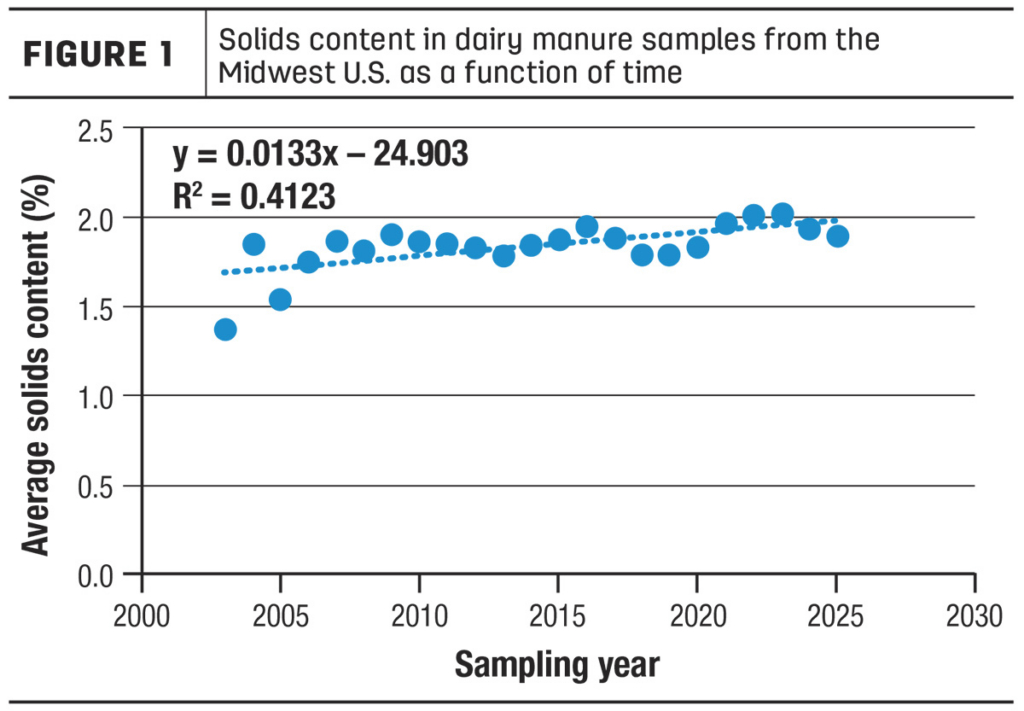
According to the University of Minnesota’s national manure database, ManureDB, median rates of nutrients found in dairy manure have increased. Over the last 20 years, the average solids content of dairy manure has slowly risen, and with it, the nutrient content as well. The nutrient rate change is most consequential in the ratio of organic to ammoniacal nitrogen. Total nitrogen in manure has increased from a median of about 20 pounds per 1,000 gallons to up to 25 pounds per 1,000 gallons in slurry manure systems. A majority of this increase comes from ammonium nitrogen, which is comparable to commercial fertilizer.
What was once a nearly even split between organic and ammonium nitrogen has shifted to favor ammoniacal nitrogen, with 60% to 70% of the nitrogen in the mineral form. Although it seems small, this change is enough to affect manure management plans for both producers and applicators. Higher concentrations of readily available nitrogen will lead to greater return on manure applied in the field.
Potential cause of rate changes
Though still unclear, there are some theories as to why the nutrient rates have increased in dairy manure. Daniel Andersen, associate professor of manure management and water quality at Iowa State University, believes it is linked to water conservation efforts and keeping nonvalue liquid separate from manure. This would include silage runoff and milkhouse wastewater, which could dilute nutrient concentrations in manure. Andersen has seen the practice of separating nonvalue water from manure produce positive results in nutrient concentrations, with the small bonus of water conservation. Instead of mixing silage pile runoff or milkhouse wastewater with manure, consider using it instead as irrigation water.
At the same time, changes in how dairy manure is managed are likely playing a role in the higher ammonium concentrations we’re seeing today. One of the biggest shifts has been the growing use of anaerobic digesters. As manure moves through a digester, a portion of the organic nitrogen is converted into ammonium, increasing the amount of nitrogen that is immediately plant-available when that manure is applied.
Similarly, solid-liquid separation is another practice becoming more common on dairy farms. These systems tend to push ammonium nitrogen into the liquid fraction while concentrating some of the organic nitrogen in the solids. As a result, the liquid manure applied to fields has more readily available nitrogen than producers may expect based on older manure analyses. Storage design has also changed. Many dairies have moved away from large lagoons toward tanks or covered storage. These systems typically have less exposed surface area, which can reduce ammonia losses during storage and help retain more ammonium nitrogen in the manure.
Taken together, these shifts help explain why dairy manure today often contains more readily available nitrogen than it did 20 years ago – and why relying on outdated nutrient assumptions can lead to surprises in both nutrient management planning and crop response.
How this affects manure application
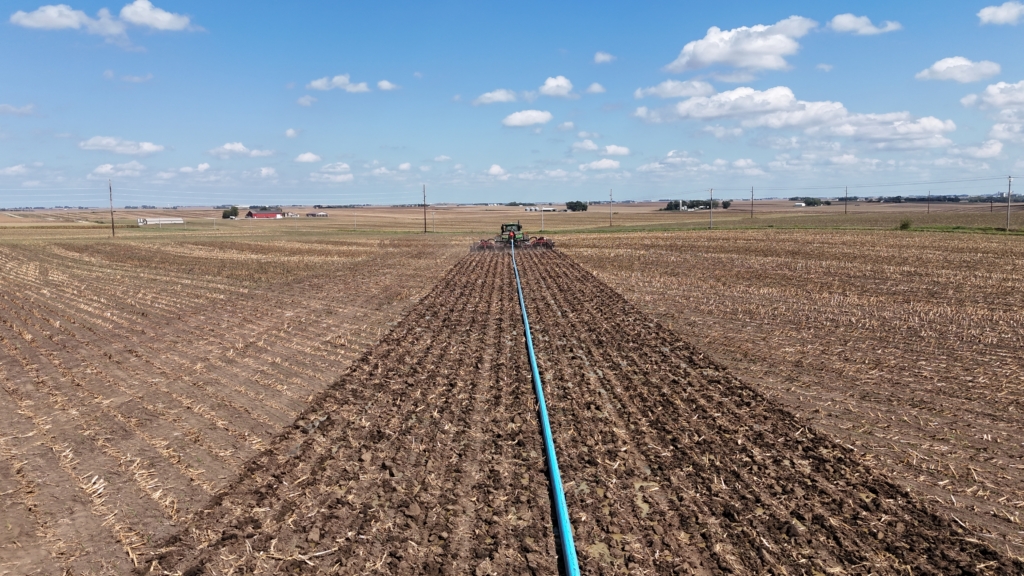
Higher nutrient concentrations lead to lower manure application rates. Based on initial data analysis, applicators could see a reduction of up to 12% in the dairy manure application rate. There are a few factors that change your manure application efficiency, and while the application rate is one of them, it is rarely a factor we can change. If you’re keeping the same dragline equipment, your tractor speed can increase to improve how fast the job gets done. The improved efficiency provides more time in the limited application window with better results.
Higher application rates and faster application speeds could be more difficult for liquid manure injection, but only marginally when compared with the payout. More concentrated manure is also good for transportability and a more valuable manure product. Higher levels of nutrients provide more value to the product while reducing the quantity needed. This means there is less to move for the applicator to reach the same application rates as previous years.
How this affects producers
A change in the application rates can mean a change in costs. However, these added costs also come with the benefit of more readily available nitrogen. A small price increase for a beneficial return on nutrients is a fair exchange.
Historical data of manure samples can help monitor and track these changes. Small median changes in reported data can lead to big adjustments in the industry. While planning for spring pumping, review your manure samples from 2025 to find out if your region is also experiencing a change in nutrient concentrations in dairy manure.
